

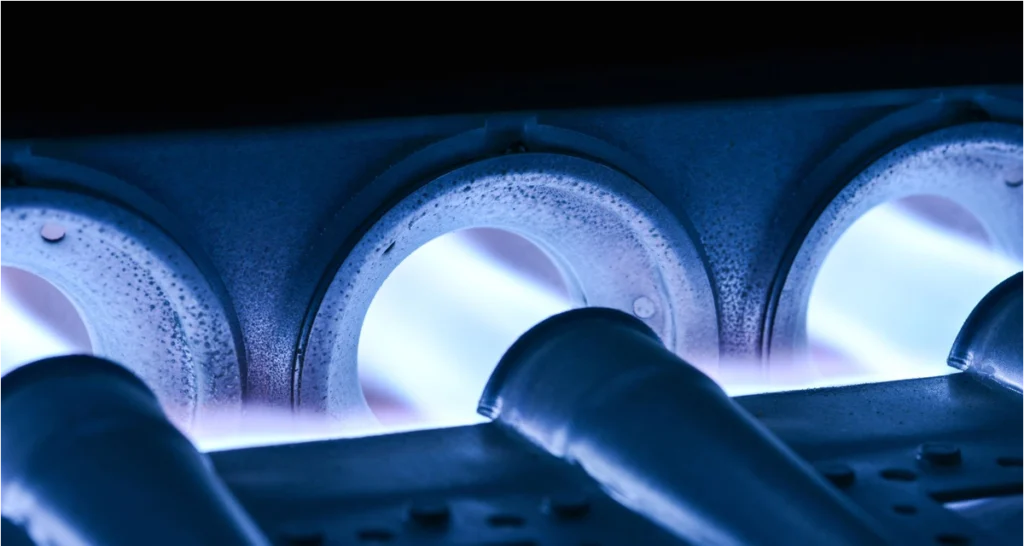
Here in Greeley and across Northern Colorado, we’re already planning around the furnace rule changes coming in 2026. Starting January 1, 2026, any new gas furnace sold or installed in Colorado will need to meet either Ultra-Low NOx (ULN) limits or ENERGY STAR® efficiency standards under state air-quality and energy policies. These changes are meant to cut pollution and reduce energy use, but they also change the kinds of equipment you’ll be able to choose when your current furnace calls it quits.
When you burn natural gas, you don’t just get heat. You also get nitrogen oxides (NOx), a family of gases that help create ground-level smog and can aggravate asthma and other breathing issues. Ultra-Low NOx furnaces are built with specially designed burners and combustion controls that drastically reduce those emissions compared with older models. In practice, that means each hour your furnace runs, it’s putting less pollution into the Front Range air we all share.
ENERGY STAR is focused on how efficiently your furnace turns fuel into usable heat. Most gas furnaces that earn the label in our climate have an AFUE of 95% or higher, meaning very little of the gas you buy is wasted up the flue. In simple terms, ULN is about cleaner exhaust, while ENERGY STAR is about using less fuel for the same comfort. Some modern furnaces are designed to check both boxes at once.
Starting January 1, 2026, Colorado’s HB23-1161 will require most new gas furnaces sold or installed in the state to meet Ultra-Low NOx limits or qualify under updated high-efficiency standards. In day-to-day terms, that means the familiar “standard efficiency” furnaces you still see in a lot of older Greeley homes are being phased out in favor of cleaner, higher-performing models.
Here’s what that looks like for your choices:
The goal isn’t to force you into a gadget you don’t want; it’s to make sure the next furnace you do install runs cleaner and wastes less fuel.
For you, the 2026 rules are less about politics and more about how your home feels and what it costs to keep it comfortable. Higher-efficiency furnaces use more of the gas you pay for, which can lower your monthly heating costs over the life of the system, especially in a climate where furnaces work hard from fall through spring. At the same time, Ultra-Low NOx designs send fewer pollutants into the air above Weld County, which supports better regional air quality over the long haul.
There are tradeoffs:
When you strip away all the policy language, the real question is simple: when should you replace your furnace and what should you replace it with under the new rules. We look at the same things you do when you’re trying to decide whether to keep repairing or finally move on from an older system:
From there, we can walk you through realistic options that fit the 2026 standards so you’re not making a big decision in the middle of a cold snap.
Before you start worrying about deadlines and model numbers, it helps to zoom out and look at the whole picture in front of you. Ask yourself:
If you’re nodding “yes” to more than one of those, it may be worth sketching out a plan now, while you still have time to think clearly instead of deciding with your coat on and your breath visible in the living room.