
Few things are more frustrating than flipping your thermostat on a cold winter night only to feel a blast of chilly air. That’s why we’ve put together this guide to help you understand what is going on and whether professional service is required.
At Origin Plumbing Heating Cooling & Electrical, we’ve received furnace service calls for everything from cracked exchangers (very dangerous) to faulty thermostat batteries (a pretty easy DIY fix). Hopefully, this guide can help save you the headache of an unnecessary technician visit.
In most cases, your furnace blows cold air because it’s still heating up, set to “fan-only” mode, or has detected an airflow fault. Start by checking your thermostat mode, installing a fresh filter, and opening vents. If cold air persists, the ignition system or limit switch may need professional service.
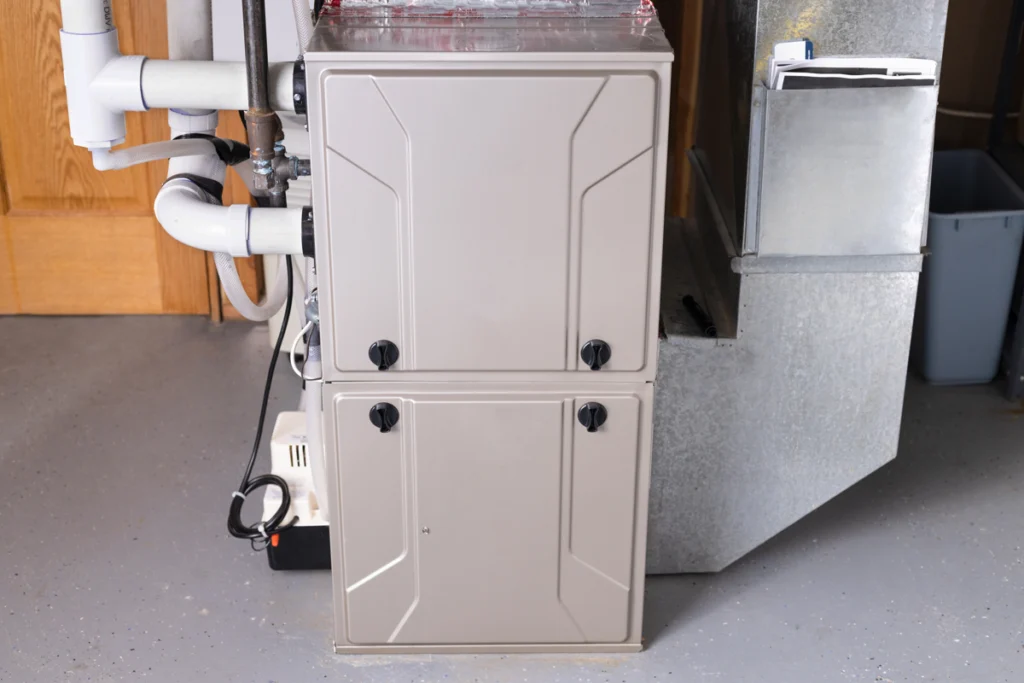
Before troubleshooting cold air, it helps to know how your furnace is supposed to work. Here are the major parts we’ll reference later:
• Thermostat – senses room temperature and signals for heat
• Gas valve/pilot or electronic ignition – starts the burner safely
• Burner – produces the flame that heats the exchanger
• Heat exchanger – transfers burner heat to your air supply
• Flame sensor/thermocouple – confirms burner is lit
• Limit switch – shuts the burner off if overheating
• Blower motor – pushes warmed air through your home
• Air filter – keeps dust out of heat exchanger and blower
• Ductwork – carries warm air to rooms, returns cool air to the furnace
• Condensate drain (high-efficiency models) – removes excess moisture safely
Here’s a simplified heating cycle:
1. Thermostat calls for heat.
2. Ignition system lights the burner.
3. Burner heats the exchanger.
4. Blower motor pushes air across the exchanger into ducts.
5. Thermostat reaches set temperature—burner shuts off; blower continues until exchanger cools.
Safety controls like the limit switch and flame sensor prevent overheating and unburned gas buildup.
What it is: Fractured exchanger leaks cold air and dangerous gasses.
Symptom: Consistent cold air, unusual odors, or CO alarm triggers.
DIY check: Test CO levels around furnace.
Deeper issue: Immediate professional inspection and replacement.
What it is: Burner and heat exchanger need 5–10 minutes to reach operating temperature.
Symptom: Air feels cold immediately after startup.
DIY check: Wait 10 minutes before judging performance.
Deeper issue: None—this is normal.
What it is: Set to “Fan On” or dead batteries prevent a proper heat call.
Symptom: Continuous cold airflow, regardless of temp setting.
DIY check: Switch to “Heat/Auto,” replace batteries.
Deeper issue: Malfunctioning thermostat.
What it is: Restricts airflow, causing poor heat exchange.
Symptom: Lukewarm or no airflow.
DIY check: Inspect and replace filter if dirty.
Deeper issue: Neglected maintenance can damage blower motor.
What it is: Obstructed vents prevent air circulation.
Symptom: Uneven heating and intermittent cold blasts.
DIY check: Open all supply and return vents; clear obstructions.
Deeper issue: Poor duct design or missing returns.
What it is: Cracks or gaps let warm air escape.
Symptom: Cold spots in rooms, uneven airflow.
DIY check: Visually inspect exposed ducts for gaps; seal with foil tape or mastic.
Deeper issue: Hidden leaks require professional duct sealing.
What it is: Shuts burner off to prevent overheating.
Symptom: Air starts warm, then drops to cold.
DIY check: Reset power switch; let furnace cool.
Deeper issue: Persistent trips indicate airflow problems or dirty coils.
What it is: Ignitor fails to light or sensor misreads flame.
Symptom: Furnace tries but won’t sustain heat.
DIY check: Observe burner ignition; clean flame sensor per manual.
Deeper issue: Sensor or ignitor replacement needed.
What it is: Insufficient fuel flow prevents proper burner flame.
Symptom: Weak or no burner flame, cold air output.
DIY check: Ensure the gas valve is fully open.
Deeper issue: Call gas-qualified technician to test pressure.
What it is: Blocked drain line causes safety switch to shut heat off.
Symptom: Blower runs without heat.
DIY check: Clear drain trap with a wet-dry vacuum.
Deeper issue: Replace pump or P-trap if repeatedly clogging.
What it is: Electrical component failure halts ignition or blower startup.
Symptom: No ignition sequence or blower doesn’t engage.
DIY check: Note error codes/LED flashes behind access panel.
Deeper issue: Control board likely needs to be replaced by a professional
We want you empowered, but some jobs are best left to licensed pros, like those at Origin. Here’s a quick guide:
DIY-Friendly Tasks:
• Replace air filters and thermostat batteries
• Reset breakers and power switches
• Open/close vents and clear simple condensate clogs
• Check and adjust thermostat settings
Call a Professional:
• Work on gas valves or lines
• Replace flame sensors, ignitors, or control boards
• Seal hidden duct leaks and repair heat-exchanger cracks
• Perform carbon-monoxide testing and advanced safety inspections
Cold air from a furnace is usually traceable to settings and airflow. Confirm the thermostat is on Heat and Auto, swap in a clean filter, open all supply and return vents, and give the system a few minutes to warm the heat exchanger. If the air stays cold, you are likely dealing with an ignition fault, a tripped safety limit, duct leaks, or a control issue. Those are problems that risk higher energy bills, repeat shutdowns, or carbon monoxide exposure if ignored.
A quick professional check now is far cheaper and safer than an emergency repair later. Still getting cold air? If you’re in Northern Colorado, give us a call at Origin Plumbing Heating Cooling & Electrical and let a licensed tech solve it today.